


Getting Started
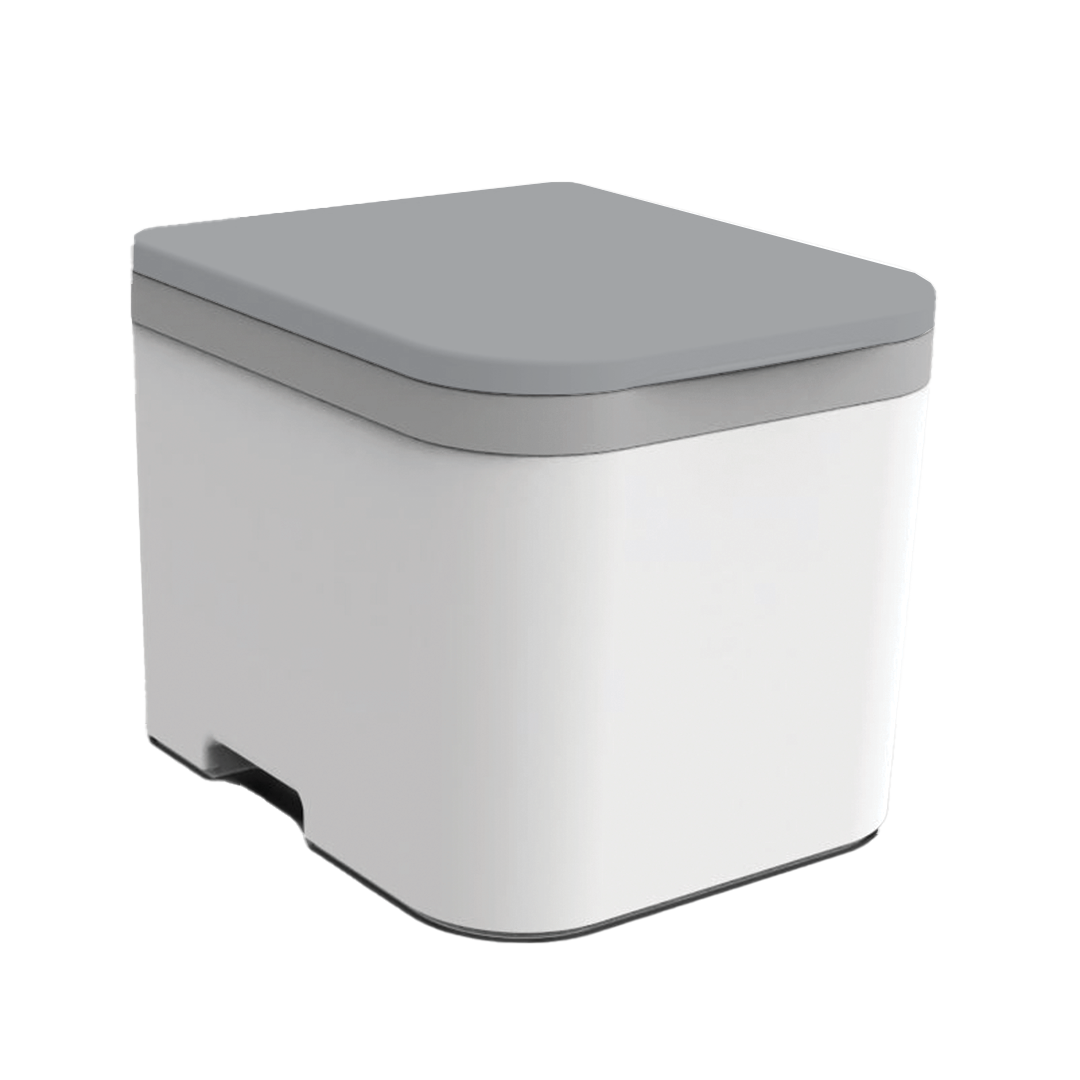
Start by placing your OGO™ ORIGIN composting toilet where you want it to live. Don’t rush—this is your bathroom, and it should work for your flow (literally and spatially). Mark the area, open the lid, sit on it, and simulate real use. You'll want room to lift the lid, run your vent, and access the power jack. It’s the perfect toilet for van-life, RVs, and more.
Pro Tip: Know your space and have it planned out before removing any existing plumbing or fixtures.
Your OGO™ ORIGIN is securely mounted by screwing the unit directly into the floor, ensuring stability during everyday use while allowing for removal when needed.
Base footprint when installed:
- Depth: 15.00” (front to back)
- Width: 16.00” (side to side)
- Height: 18.375” (floor to top of unit)
These compact dimensions are ideal for tight installs like van builds, cabins, or wet baths.

While the toilet base allows for flush installation, we’ve found that a 2-inch gap between the back of the toilet and the wall gives you a better fit and function.
Here’s why that 2" space matters:
- Pushes the toilet bowl slightly backward, giving you more front clearance for sitting, lifting the lid, or stepping in narrow spaces.
- Allows smoother hose routing—especially if you're running a vent hose directly out of a wall to an exterior vent.
- Reduces stress on the power jack and hose connection, both located near the back corner of the unit.
So yes, flush is possible—but if you’ve got the space, go with 2 inches off the wall.
When integrating your unit into cabinetry or enclosed furniture:
- Allow at least 2 inches of clearance behind the vent outlet for hose or PVC routing
- If planning for hose swivel to the side, allow space accordingly for the full arc
- Leave enough room to easily plug and unplug the power cable
Position the base plate where the toilet will live. Leave at least 2 inches of space behind the unit for hose and wiring clearance. If your layout requires it, you can swap the vent and fan housing to opposite sides using our vent insert guide.
Mark the four screw holes using the plate as a template. These are positioned to avoid interference with any drain cutouts or wiring.
Drill pilot holes if needed, depending on your flooring material (wood, composite, marine board, etc.).
If you’re installing the OGO™ Drain Kit, plan to cut your floor drain hole before mounting the base.
- Center the hole in front, under the urine bottle.
- Refer to drain kit instructions for recommended opening
- Always dry-fit the drain to ensure proper alignment with the base plate and bin.
Always test-fit the unit on the base before securing screws.
Secure the base using the included #14 3/4” sheet metal screws, or swap in bolts with washers for more heavy-duty applications. If you're mounting in a van, boat, or RV—bolt to subflooring, not just finish flooring, for long-term security.
Hole-to-hole spacing (approx.):
- Side to side (center to center): 11.04”
- Front to back (center to center): 9.04”
- Once secured, the toilet simply clicks into the plate.
The riser plate is optional, but it helps if you need a higher seat height or if you want a cleaner install over an old flange or drain hole.
What You Need
- OGO™ ORIGIN Floor Riser Drain Adapter Plate
- Screwdriver or Drill
- Mounting hardware (included)
Directions:
1. Prep Your Space
- Remove anything loose.
- If you're replacing an old toilet, make sure the surface is clear and clean.
- Check surface level.
- Make sure the floor under the Riser Plate is flat and solid.
2. Position the Riser Plate
- Center the Riser Plate over your drain hole (if applicable).
- Align it based on where you want your OGO™ toilet to sit. (Front to back and side to side.)
3. Secure the Riser Plate
- Use the provided screws to attach the Riser Plate directly to the floor.
- Drill into the floor if needed — just make sure you’re not hitting tanks, pipes, or wiring underneath.
4. Install the OGO™ Toilet
- If connecting to a standard floor flange, install the flange adapter to your drain opening and secure it according to its instructions.
- Place the OGO™ ORIGIN on top of the riser plate, aligning the drain outlet with the flange adapter or drain connection.
- Fasten the unit to the floor using the provided mounting brackets and hardware.
- Attach your vent and drain lines to complete the installation.
Note:
- It can be installed over an old black tank flange to cover and seal old holes while giving your compost toilet a fresh, level surface to mount onto.
- Always pre-check under your floor before drilling.
- Use all the provided hardware. Skipping screws can cause wobble.
- If mounting to thin floors, consider extra reinforcement underneath.
The OGO™ Drain Kit is an upgrade that allows you to permanently or temporarily bypass the urine bottle. Instead of collecting liquid waste in the front bottle, the drain kit diverts it downward into a 1-1/4" PVC connection—so you can route it wherever your system allows.
Each kit comes with:
- A top-mounted adapter inside the toilet
- A 1-1/4” PVC stub for routing beneath the unit
- Printed installation instructions (and digital copy)
What you’ll need:
- #2 Phillips screwdriver or drill
- PVC primer/glue (optional)
- Additional PVC fittings or hose to connect to your drainage system
How to Install the Drain Kit
- Installation is quick and tool-light. Here’s how it works:
- Remove the urine bottle and access the internal front compartment.
- Install the included drain fitting in place of the bottle insert.
- Attach the drain hose or PVC pipe underneath using the provided stub.
- Route your line to your chosen greywater disposal point.
Power
The power jack is positioned just behind the vent outlet, sharing the same rear side of the toilet for a clean and unified install.
- Located approximately 12.25 inches from the floor, slightly lower than the vent
- Designed for a 12V DC input, using a 5.5mm x 2.5mm center-positive barrel plug
- Compatible with our recommended 12V, 10A power supply or with your onboard 12V system
- This setup keeps your airflow and power routing streamlined—especially useful in compact or off-grid environments.
A Quick Note on Safety: Always follow proper wiring practices and consult a licensed electrician or off-grid installer if you’re unsure about setup.
We cannot assume liability for improperly installed electrical connections. Local codes, fuse ratings, and battery type all play a role.
What You’ll Need:
- Wire strippers/cutters
- Pliers or crimpers
- Cable clamps or terminal connectors
- Screwdriver (if mounting to a block)
- Multimeter (optional but recommended)
Directions:
1. Locate and Prepare the Power Cable
- Your power cable is included in the pack-out bag inside the solids bin.
- If missing, contact support: sales@ogotoilet.com
- Strip the outer insulation back far enough to separate the red and black wires. You’ll want to route each to its respective terminal.
2. Make Your Connection
- Option A – Connecting to a Battery Terminal
- Strip about 1/2" of insulation from the wire ends
- Slide wires into terminal connectors and crimp securely
- Connect Red to Positive (+) and Black to Negative (-)
- Option B – Connecting to a Fuse Block, Inverter, or Step-Down Converter
- Strip wire ends long enough to wrap securely
- Insert or wrap each wire into the appropriate connector slot
- Tighten with a screwdriver
- Need to go longer? No problem. You can extend the wire length with properly rated DC wire and connectors.
3. Plug Into the Unit
- Locate the barrel plug on your power cable.
- This plugs into the power jack on the rear right side of the unit, next to the vent housing.
- You’ll hear the fan spin quietly—your OGO™ is now ready to go.
The OGO™ ORIGIN runs on a 12V DC system—but that doesn’t mean you need a solar rig or RV battery to power it. If you’re using your unit in a home, cabin, or off-grid structure with standard wall outlets, you can connect it directly with the right power adapter.
To safely power your OGO™ ORIGIN from a standard 110V AC outlet, you’ll need an AC-to-DC power adapter that matches these specifications:
- Output Voltage: 12V DC
- Current Rating: Up to 10 Amps (120W max)
- Polarity: Center-positive
- Plug Size: 5.5mm x 2.5mm barrel connector
These specs are critical—using an adapter outside of this range can result in underperformance, electrical issues, or damage to the unit.
Can You Use a Different Adapter?
Yes—but with caution. You’re not required to purchase from us, but we only guarantee compatibility and performance with the adapter we provide. If you choose to use a third-party option, make sure it meets the correct specifications. The wrong adapter can lead to motor issues, timer failure, underpowered performance, and risk of permanent damage.
If you’re wiring your OGO™ ORIGIN directly to a 12V lithium rechargeable battery, adding crimped-on connectors to your power cable is the cleanest, most reliable way to ensure a safe, solid electrical connection.
Tools & Materials You’ll Need
- OGO™ ORIGIN 12V power cable (included with your unit)
- Wire cutters
- Wire strippers
- Crimping tool (ratcheting crimper preferred)
- Crimp-on terminal connectors (ring or spade, sized to match your battery posts)
- Heat shrink tubing (optional but recommended)
- Multimeter (optional, for testing continuity and voltage)
Directions:
1. Measure Your Distance
- Before modifying your power cable, measure the distance between your OGO™ toilet and your battery or fuse box.
- Ensure the cable length is long enough—or plan to extend it using compatible gauge wire and butt connectors if needed.
2.0 Strip the Cable
- Separate the red (positive) and black (negative) wires by gently pulling them apart for a few inches.
- Use your wire strippers to remove about 3/8" to 1/2" of insulation from each wire end.
- Make sure the copper strands are clean, untwisted, and ready for insertion.
3. Choose and Prepare Your Connectors
- Select the correct crimp-on terminals to match your battery’s post or terminal block. Most lithium-ion batteries use M6, M8, or M10 post sizes—so choose ring terminals with the right inner diameter.
- Slide heat shrink tubing over the cable before you crimp (if using). You’ll heat it later for a clean, sealed finish.
4. Crimp the Connectors
- Insert the stripped copper wire fully into the metal barrel of the connector.
- Using your crimping tool, compress the barrel firmly in the correct notch (usually color-coded: red for 18–22 AWG, blue for 14–16 AWG, yellow for 10–12 AWG).
- Give a gentle tug to confirm the wire is securely held.
- Repeat for both red and black wires.
- If using heat-shrink tubing, slide it over the crimped area and heat it until snug for extra protection.
5. Connect to Your Lithium Battery
- Red wire goes to the positive (+) battery terminal
- Black wire goes to the negative (−) terminal
- Use locking washers and nuts if required. Tighten everything securely.
- Once connected, your power cable is now properly terminated for safe, efficient use with any 12V lithium rechargeable battery.
6. Final Checks Before Powering On
- Make sure your fuse (if inline) is properly rated—10 amps recommended
- Confirm polarity with a multimeter (red = positive, black = negative)
- Plug the barrel jack into the rear power port of the OGO™ ORIGIN
- Your fan should spin quietly, and your unit is now powered and ready.
Ventilation
By default, the OGO™ ORIGIN vent connection is located in the back right corner of the unit. If needed, the vent insert can be swapped to the left side of the unit. This is ideal for drawer systems, left-hand wall access, or compact van and schoolie layouts.
- The vent sits approximately 13 inches from the floor to the center of the T-bar hose connection.
- It is fully swiveling, allowing you to route the hose directly back, to the side, or anywhere in between based on your build.
- The vent hose fits snugly over a 1-1/4 inch PVC pipe, thanks to the included 3-foot wire-reinforced hose with rubber ends.
- The vent output swivels for direct back, direct side, or anywhere in between.
The OGO™ ORIGIN includes a 3-foot steel wire-reinforced hose. This durable, clear-flex hose is built to maintain shape, resist kinking, and hold firm during installation or long-term use.
Measurements:
- Outer Diameter (OD): 1.6825"
- Hose End Inner Diameter (ID): 1.6"
- Designed to fit perfectly over 1¼" PVC pipe
- This allows you to integrate it into your vent path using standard fittings, making routing through walls or floors simple and secure.
The hose comes with two pre-mounted black hose ends—one on each side. These provide a snug, tool-free connection to both the OGO™ unit and your wall or floor fitting.
Whether you’re installing in a van, RV, tiny home, or cabin, the OGO™ ORIGIN’s vent hose system is designed to be simple, effective, and adaptable.
Your OGO™ ORIGIN includes a 3-foot wire-reinforced ventilation hose, ready to connect to your toilet and exterior vent:
- Outer Diameter (OD): 1.6825"
- Rubber Hose End Inner Diameter (ID): 1.6"
- Fits perfectly over 1-1/4” PVC pipe
- Flexible PVC with spring steel wire helix for structure
- Two molded rubber hose ends included
- No clamps or tools needed in most installs
This design provides a tight, tool-free seal for most builds.
How to Install the Vent Hose
- Locate the T-bar connector on the back corner of your OGO™ ORIGIN.
- Push one rubber hose end onto the T-bar. The tight fit ensures a secure seal.
- Attach the other end to your exterior vent (like the OGO™ Shell Vent or 1-1/4” PVC outlet).
- That’s it—your system is now vented and ready to move air out of the solids bin continuously.
Final Tips
- Always seal exterior vent exits to prevent moisture or insects from entering
- Keep hose runs away from sharp bends or crushing points
- If installing in a cold climate, insulate the vent path to reduce condensation buildup
- Need replacement hose ends or a longer hose option? Contact support here and we’ll help get your system dialed in.
If the 3-foot length is too much, you can cut it down:
- Use a utility knife to slice through the plastic exterior of the hose.
- Use wire cutters to cut the internal spring steel wire.
- Remove and reuse the rubber hose ends.
- Reattach them using a strong adhesive like Gorilla Glue for a durable hold.
This lets you customize the fit while maintaining the original functionality.
We offer additional vent hose by the foot, custom cut to your required length:
- Sold per foot
- Made from the same material and dimensions as the original
- Same OD (1.6825") and ID at the hose end (1.6")
- The rubber ends fit snugly over standard 1-1/4” PVC pipe—no adapters required
- Compatible with 1-1/4" PVC for easy extensions
- Flexible, reinforced, and built for long-term durability
- Add extra hose ends if needed for custom builds
Measure the distance from your toilet’s T-bar to your vent exit. Add a bit of slack for routing and turns.
Example:
Need a 25-foot hose? Your unit includes 3 feet—add 22 feet to your order. Our team will confirm your custom length and assemble your hose before shipping.
Note: If you’re ordering hose separately from your toilet, be sure to include 2 hose ends in your order for a complete fit.
We don’t recommend using another hose type. This hose is built for odor resistance, airflow, and durability—and fits our system perfectly.
You can use PVC elbows, couplers, or flex adapters with the included hose. Just ensure:
- A tight fit at the hose connection
- A clean exit path for airflow outside your structure
- The fan remains unobstructed and powered at all times
The OGO™ ORIGIN portable composting toilet can operate without a vent hose in many setups, especially in a van or RV toilet installation where natural airflow is present. Its urine-diverting design, coco coir medium, and internal fan help manage moisture and odor effectively without external ventilation. For fully enclosed spaces like a tiny home bathroom or off-grid cabin, adding a vent hose can improve airflow and provide additional odor control.
Yes. You can switch the vent side to suit your space. The fan housing pops out and can be swapped to the opposite side. Use a flathead screwdriver if needed.
Watch This YouTube Video For Tips
Tools You’ll Need:
- 1-5/8" hole saw
- Drill + drill bits
- 1-1/4" PVC pipe (for thick-wall installs)
- Marker or pencil
- Screwdriver or socket wrench
- Mounting hardware (included)
Shell Vent Orientation
Always install the vent with the open end facing downward, ideally at a 45° angle toward the ground. This prevents wind interference, water intrusion, and backdraft.
Installing in Thin-Walled Structures (Vans, RVs, trailers, campers, etc.)
- Cut a 1-5/8” hole in the wall where you want the exterior shell vent.
- Remove the vent cover by unscrewing the two internal screws.
- Place the back plate on the outside and the white hose flange on the inside.
- Mark and drill the four mounting holes.
- Bolt the pieces together—do not use the long included screws for thin walls. For the cleanest look, insert bolts from the inside out.
- Reattach the vent cover.
- Attach your ventilation hose to the inner hose flange.
Installing in Thick-Walled Structures (Tiny homes, cabins, buildings with insulation, etc.)
- Cut a 1-5/8” hole for a 1-1/4” PVC pipe.
- Remove the shell vent cover.
- Mount the back plate to the exterior wall using the included long screws.
- Push a cut length of 1-1/4” PVC through the wall, extending 1–2 inches inside.
- Seat the pipe into the recess on the vent’s back plate.
- Reattach the cover.
- Connect your hose to the inner end of the PVC pipe.
Need more power?
Upgrade to a high-CFM fan for extra ventilation in enclosed or humid conditions.
By default, OGO™ ORIGIN has the fan housing on the right and the filter intake on the left, but you can swap them to better match your install. Reversing the inserts can improve airflow in tight or humid spaces, simplify vent hose routing, and boost ventilation efficiency for your specific layout.
Tools You'll Need
- A flathead screwdriver (preferably sizable)
Directions:
- Power Down: Ensure your OGO™ ORIGIN is turned off and disconnected from any power source.
- Access the Inserts: Open the unit to locate the vent and filter inserts.
- Remove the Inserts: Using the flathead screwdriver, gently pry out the vent and filter inserts. It's recommended to start from the edge where the power jack is installed for easier access.
- Swap Positions: Place the vent insert into the previous filter insert slot and vice versa. Ensure they are securely fitted.
- Reconnect Components: Reattach any hoses or connections to the newly positioned inserts.
- Power Up: Reconnect the power and turn on your OGO™ ORIGIN to test the new configuration.
Additional Tips
- High-CFM Fan Upgrade: If you're operating in particularly humid conditions or have a longer vent hose run, consider upgrading to a high-CFM fan to enhance airflow.
- Charcoal Filters: For added odor control, especially in marine environments or areas with limited ventilation, charcoal filters can be installed within the vent housing.
- Vent Hose Compatibility: The standard vent hose has an outer diameter of 1.6825" and fits snugly over 1-1/4" PVC pipes, ensuring a secure connection.
The short answer? Yes—you can. But this is an advanced, optional modification and must be done carefully to ensure proper function, safe airflow, and long-term moisture management.
In some rigs, builders have chosen to Tee into their existing black tank vent stack instead of creating a separate exit for the OGO™ vent.
This approach can:
- Reduce the number of wall or roof penetrations
- Route ventilation through an already elevated escape path
- Consolidate airflow channels into a single external outlet
- But this method has tradeoffs—and airflow and moisture control become even more critical.
This is a mod, not an official OGO™ install method. But for those who understand the risks and plan their plumbing carefully, here's a general approach:
- Locate your black tank’s vent pipe—usually a vertical PVC pipe running from the tank up to the roof.
- Install a PVC Tee in that vertical run, ensuring you never connect directly to the tank or below the trap.
- Use PVC reducers/adapters to transition down to 1-1/4" PVC for compatibility with your OGO™ vent hose.
- Ensure an upward path from the toilet to the vent, so airflow continues outward and doesn’t stall.
- Flush and clean your black tank thoroughly before installation to reduce the risk of backdraft odor.
Pro Tips to Maintain Moisture Balance
- Never use this setup without an active fan. The OGO™ fan must run 24/7 to maintain airflow direction and pressure.
- Consider a check valve or charcoal filter in the vent path to prevent potential backflow.
- Monitor humidity in the solids bin. If you're seeing condensation or a soggy compost medium, you may need more airflow or a separate vent run.
Yes! Proper ventilation is an important part of how the Origin works. The vent pulls air out of the solids bin to keep odors away, control moisture, and help the breakdown of the waste. Each OGO Origin comes with a vent hose and a fan included. And, if you ever need a replacement part, we have it! Without proper ventilation, the composting process can be slow and smelly.
Miscellaneous
- From the Inside (Fan Housing Method): Unplug the unit, open the bowl, and lift out the fan housing. Drop up to three pucks into the vent bar. Good for full access, but may reduce airflow.
- From the Outside (Preferred Method): Keep the bowl sealed. Simply slide a puck into the vent opening from the outside. Add more if needed. Easier to change and manage long-term.
Note: Charcoal pucks are effective for odor control, but can slightly restrict airflow. If needed, upgrade with our High CFM Fan Kit for better ventilation.
When showering, protect the top of the unit with our custom-fit wet bath cover. It allows you to: keep the power cable and vent hose connected at all times, shield the seat and electronics from splashes, and remove easily for daily use. Shop the Wet Bath Cover
Elevate the unit off the shower pan to prevent water pooling beneath it—a common issue in wet bath floors. Use:
- A lip or waterproof riser
- A bamboo or slatted shower mat
- A custom-cut marine platform
- Even a 1” lift makes a major difference in preventing damage to the motor or wiring.
In a wet bath—where humidity is naturally higher—you must ensure the fan has proper ventilation and airflow. You Have Two Venting Options:
- Vent Hose Out the Wall or Ceiling—this is the standard method—run your included hose to a wall or roof port to allow continuous airflow.
- Use a Charcoal Filter Inside the Vent Housing
Extra Tips for Success
- Never trap the fan—it needs airflow to move moisture out
- Avoid sealing the unit to the floor—leave room to lift and check for dampness
- Clean your wet bath floor regularly and let it dry fully between showers
- Use marine-grade silicone to seal wiring holes if needed
- Prepare the solids bin—rotate the stir rod so that it’s positioned at the front of the solids bin. (This is the first area where overflow typically occurs.)
- Fit the bucket collar—slide the bucket collar into place at the front of the solids bin. Make sure the collar is seated between the side ribs of the toilet shell for a secure fit.
- Install the retaining clips—position the retaining clips above the bucket collar. The clips act as a stop, securing the bin firmly and reducing vertical movement on bumpy roads.
- Tips for Best Performance—inspect the collar and Clips regularly, especially if you travel extensively on rugged trails.
Tools needed:
- OGO™ ORIGIN Compost Toilet
- OGO™ Compost Toilet Flange Adapter (sold separately)
- OGO™ Urine Drain Kit (optional if you want to bypass the bottle)
- OGO™ Riser Plate (optional if keeping flange)
- Wrench
- Phillips screwdriver
- Waterline caps
- Rubber gloves
- PVC glue (optional for sealing)
Directions:
1. Remove the Old Toilet
- Turn off your RV’s water supply.
- Disconnect the water line. Cap it to avoid leaks.
- Unbolt the toilet from the floor flange.
- Lift it out and clear the area. Gloves recommended.
2. Prep the Flange
- Clean up the flange and the surrounding floor.
- Cap or cover the flange using the OGO™ Compost Toilet Flange Adapter.
- Optional: Use PVC glue for extra odor seal.
3. Install the OGO™ ORIGIN
- Set the OGO™ in place over the capped flange.
- Secure it using brackets or bolts as needed.
- If using a Drain Kit, run the urine line to your gray tank or external container.
4. Finish Up
- Connect power to the 12V fan system.
- Check venting. Make sure the vent hose is properly routed outside.
- Double-check stability. Done.
Note:
- Your black tank will stay empty unless you reroute the urine line into it. You can remove it altogether if desired.
- No need to rip out plumbing, just cap the water line and adapt or seal the drain. You can easily switch back to a flush toilet later if you want.
- Inspect fittings after rough drives. It’s rare to have issues, but worth checking.
Still have questions? We’re here to help.
Our resources are just the start. If something’s still unclear, don’t hesitate to reach out. OGO’s team is here to make sure your adventures stay easy, clean, and worry-free.